The Great Kelp Cascade!


Did you know that Sea Otters have a whole week dedicated to their awareness?? That’s because these animals play an important role in keeping their ecosystem healthy and balanced! It doesn't hurt that they are also VERY cute! Sea Otter Awareness Week runs September 20 - 26 this year (2026). In celebration, here is a short article (below) you can read with your students on sea otters and how important they are to a kelp forest.
At the end of this post, you can download a printable copy of the article, as well as our Otters, Urchins and Kelp Lab! This activity is a great way to get students moving, collect data and analyze results (plus it only requires pom poms!).
Don’t have the resources for the hands-on lab? We have included a digital interactive at the bottom!

The Great Kelp Cascade! Reading

In the Pacific Ocean near the West Coast of the United States, there are hidden underwater ecosystems called kelp forests. Kelp is a large type of seaweed (algae) that uses energy from the Sun to make its own food. This makes kelp a producer. Kelp also provides food and shelter for many ocean animals, just like trees in a regular forest!
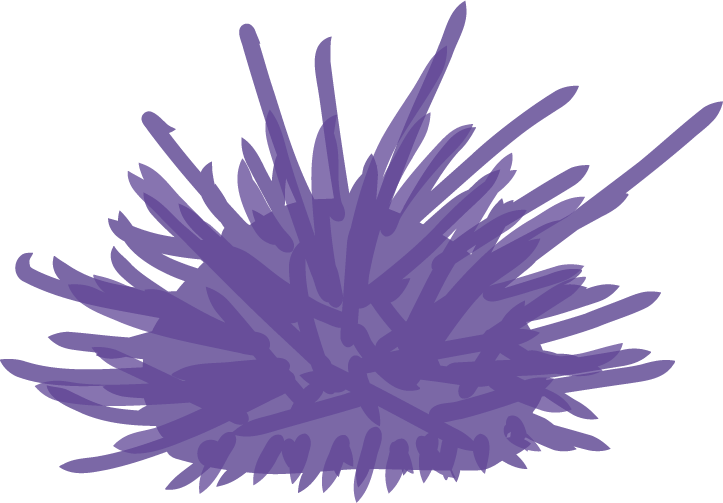
Small, spiky animals called sea urchins live in kelp forests and eat kelp. This makes sea urchins primary consumers. Sea urchins can eat a lot of kelp, like little lawn mowers of the sea. Sea urchins have spikes all over their body, which help to protect them from predators. There are not very many animals that can safely eat a sea urchin.

Sea otters are one of the few animals that can eat sea urchins! They swim down to the bottom of the kelp forest, pick up a sea urchin, take it back to the surface, and float on their back while they crack open the sea urchin with a rock and eat the soft insides.
These three living things make a very important food chain for the entire ecosystem. Let’s think about what happens if there are plenty of otters in a kelp forest.

If there are many sea otters, they eat lots of urchins.
If there are fewer urchins, less kelp gets eaten.
If more kelp survives, many ocean animals have homes and food!
But what if sea otters are removed?
The urchin population grows.
The urchins eat too much kelp.
The kelp forest can disappear, and animals lose their habitat.
One change, like losing sea otters, can affect the entire ecosystem!
This type of chain reaction is called a trophic cascade. A trophic cascade happens when a change in one part of a food chain causes big changes in other parts of the food web. Because otters determine whether or not the trophic cascade will happen, they are called a keystone species. The relationship between kelp, sea urchins, and sea otters shows how one change can affect an entire ecosystem and why keeping ecosystems balanced is so important.
Glossary
Consumer – A living thing that cannot make its own food and must eat other plants or animals to get energy.
Ecosystem – A community of living and nonliving things that interact with each other in one place.
Food Chain – A simple path that shows how energy moves from one living thing to another.
Food Web – A diagram that shows the ways many food chains are connected in an ecosystem.
Habitat – The natural home where a plant or animal lives.
Kelp – A large type of seaweed that grows in the ocean and makes its own food using sunlight.
Kelp Forest – An underwater forest made of kelp that provides food and shelter for many ocean animals.
Keystone Species – A species that has a very large impact on its ecosystem. If it is removed, the ecosystem changes dramatically.
Pacific Ocean – The largest ocean on Earth. It borders the West Coast of the United States and is home to many kelp forests.
Primary Consumer – An animal that eats producers (plants or algae) for energy.
Producer – A living thing that makes its own food using energy from the Sun.
Sea Otter – An ocean mammal that eats sea urchins and helps keep kelp forests healthy.
Sea Urchin – A small, spiny ocean animal that eats kelp.
Trophic Cascade – A chain reaction in a food web that happens when a change at one level affects other levels.
Printable Article with Questions
Otters, Urchins, and Kelp! Lab


Comments